The Unphotographed Room: How to Read a Cottage Listing's Gaps
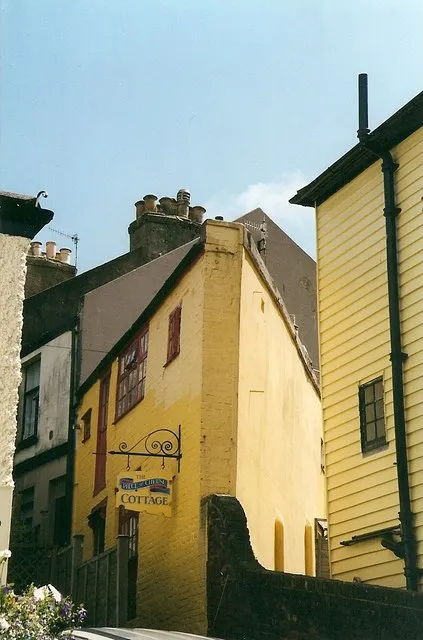
Photo: Richard Croft, CC BY-SA 2.0, via Wikimedia Commons
A cottage listing is a sales pitch with a floor plan attached. The photographs are chosen, edited and ordered. That does not make them dishonest, but it does mean the gaps deserve as much attention as the highlights. A missing bathroom shot is not automatically a red flag; a drone photo that carefully avoids the road is not proof of a motorway at the end of the garden. But omissions cluster, and clusters tell a story. This is a guide to reading that story before you book.
Absence is data, not a verdict
The first rule of listing forensics is restraint. Plenty of lovely cottages have imperfect photography. Hosts are not professional photographers, and a cottage with a small bathroom may simply have no wide-angle lens or no desire to make a modest room look worse. The question is not 'why is this missing?' in isolation. It is 'what is the pattern, and does the host answer it clearly?'
A single gap is a prompt. Three gaps around the same theme — access, space, or surroundings — is a reason to ask questions before you pay.
The five absences worth noticing
No exterior photograph
An exterior shot does two jobs: it shows the building's character and it sets the cottage in its surroundings. When every image is interior, ask why. It may be that the outside is shared, overlooked, on a slope, or simply less photogenic than the inside. None of those are deal-breakers, but they affect how you use the place. If you are booking for a summer evening with a glass of wine outside, you need to know whether there is a private bit of outside to sit in — and what it looks onto.
No bathroom photograph
This is one of the most common gaps, and one of the easiest to over-read. Small bathrooms are hard to photograph. But a missing bathroom shot becomes more meaningful when the listing also mentions a 'compact' bathroom, a 'shower room' or a bath only in the text. That is not a trap; it is information. Check the dimensions if they are given, and ask directly whether the shower is over the bath, whether there is a step, and whether the room has a window or extractor fan.
No view out of a window
A view shot is a promise about context. If the listing shows every room but never shows what you see from the window, you may be looking at a car park, a neighbouring wall or a yard. Again, this is not necessarily bad. A cottage on a village street can be charming precisely because it looks onto village life. But if you are booking for a 'peaceful rural escape', the view matters. Ask for a photo taken from the main living-room window, not a stock image of the nearest valley.
Ceilings cropped out of every room
Repeatedly cropping the top of a room can hide low beams, a sloping ceiling, a loft conversion or a cramped upstairs. It can also simply be a compositional choice. The tell is consistency: if every interior shot stops at the top of the window, look for ceiling height in the description. Words like 'characterful', 'cosy' and 'traditional' can be lovely — and can also mean 'mind your head'. If anyone in your party is tall, ask for a measurement rather than an adjective.
A drone image that excludes the road
Drone photos are excellent at showing countryside and terrible at showing context. If the aerial shot circles the cottage but the road, farmyard or neighbouring property is always just out of frame, ask what is nearby. A road can be a quiet lane or a fast B-road. A farmyard can be a lovely backdrop or a 6am start with machinery. The listing does not have to include a traffic map, but the host should be able to tell you what you will hear and see.
A ten-minute shot-list for your shortlist
Before you fall for the interiors, run a quick checklist against the listing. You are not looking for perfection; you are looking for enough information to book with your eyes open.
- One clear exterior shot, ideally from the approach.
- The main living space, with the ceiling visible.
- Every bedroom, or at least every bedroom that will be used.
- The bathroom, even if it is small.
- A view from at least one window.
- The outside space, including whether it is private or shared.
- Parking, if you are driving — and what the final approach looks like.
- Any stairs, steps or sloping ground that affect access.
If more than two of these are missing, do not abandon the cottage. Send the host a short, friendly message. A good host will answer with photographs or plain facts. A vague answer is useful too.
What to ask before you pay a deposit
Keep the questions specific and easy to answer. You are not cross-examining anyone; you are filling in the gaps the listing left.
- Could you send a photo of the exterior and the parking area as they look from the road?
- Is the outside space private, shared, or overlooked — and is there a table and chairs?
- What is the bathroom like? Is the shower over the bath, and is there a step into it?
- What is the ceiling height in the main bedroom and living room?
- What can you see and hear from the main windows — road, farm, neighbours, pub garden?
- Are there any stairs, steep steps or uneven surfaces between the car and the front door?
- Is there anything nearby that does not come across in the photos — a working farm, a road, a building site or a shared driveway?
When a gap is just a gap
Some omissions are innocent. A host may have changed the bathroom since the photos were taken. A south-facing garden may be hard to capture in one frame. A drone shot may simply be an amateur's pride and joy. The point is not to treat every listing as a puzzle to be solved, but to notice when the silence is loud enough to ask about.
The best cottage bookings are not the ones with the most polished galleries. They are the ones where the reality matches the expectation you built from the listing. A quick question about the unphotographed room is usually cheaper than a week of discovering it for yourself.