The Corner Shop Claim: How to Check a Cottage's 'Walk to the Shop' Before You Book
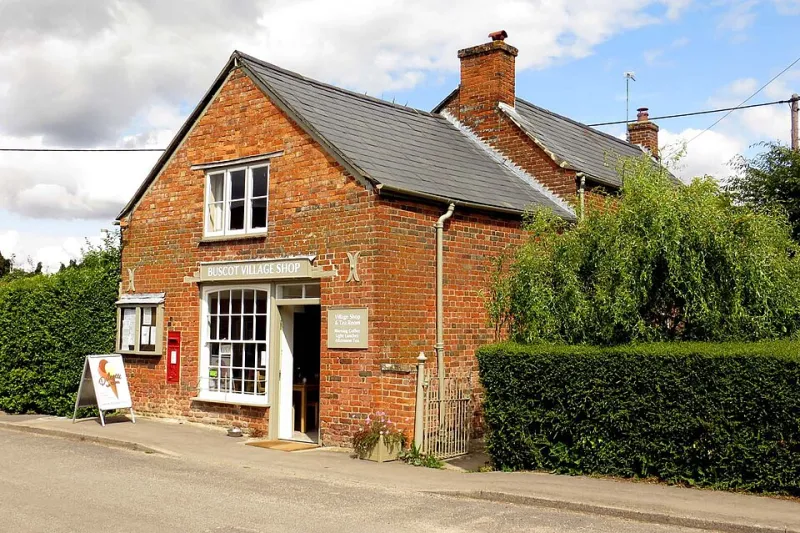
Photo: Steve Daniels , CC BY-SA 2.0, via Wikimedia Commons
A village shop is one of those cottage amenities that sounds modest and turns out to be quietly wonderful. Fresh milk without moving the car. A paper on a wet morning. Something forgettable but essential for dinner. The trouble is that 'near the village shop' is one of the loosest phrases in the UK cottage listing vocabulary. Near can mean a lovely two-minute walk across a green. It can also mean a 15-minute trudge along a road with no pavement, a steep hill and a shop that shuts at 4pm on Sundays. If the shop matters to your break, it is worth checking properly.
Start with the route, not the distance
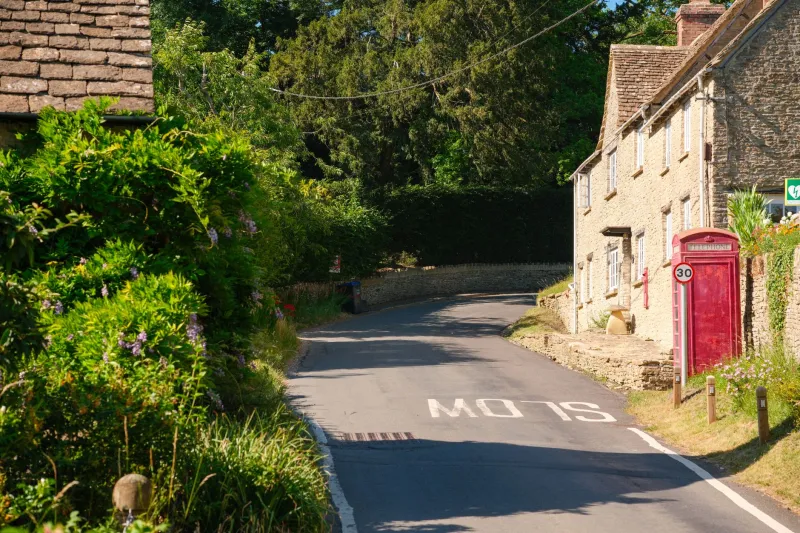
Distance is the easy number to check and the least useful on its own. Put the cottage postcode and the shop into a walking-directions app, then switch to satellite view. Look for the actual line of travel: is it a pavement, a footpath, a verge, a lane with passing places, or a fast road with neither? A quarter of a mile beside an A-road can feel much longer than half a mile on a village street.
Check for the details that maps often flatten out: a steep hill, a stile, a kissing gate, a canal towpath that turns muddy, or a footpath that looks direct in summer but is overgrown by November. If the listing says 'a short walk', ask the owner for a sentence describing the route. A good host will tell you whether you need boots, a torch, or the car.
The pavement test and the after-dark test
Two questions sort out most 'near the shop' claims. First, is there a continuous pavement or safe verge from the cottage door to the shop? Second, would you be happy walking it after dark in winter?
A lane can be charming in daylight and less so at 5pm with a dog, a child and a bag of shopping. Look at street lighting on the map, but do not trust it completely. Ask the owner whether the route is lit. If the answer is vague, assume it is not. A torch is fine; a blind bend with no verge is not. This matters most for anyone with a pushchair, wheelchair, walking stick or a dog that pulls.
Find out what kind of shop it really is
A 'village shop' might be a proper community store with a post office counter, a deli fridge and local bread. It might be a farm shop on the edge of the village. It might be a petrol station forecourt with a fridge, a few shelves and a coffee machine. None of those is bad, but they are not interchangeable when you are planning meals.
Look at recent photos and reviews rather than the listing image. Search the shop's name and check its own website or social media, not just an old map entry. Opening hours change with the season, and village shops often close for a half-day, shut early on Sundays, or run shorter hours in January. Bank holidays are another trap. In 2026, as ever, a shop that is open all week can still be shut when you arrive on a Sunday evening.
If the shop is central to your plans, ring it. Ask a specific question: 'Do you sell fresh bread, milk and eggs after 5pm on a Sunday?' rather than 'Are you nearby?' You will learn more in 30 seconds than from a paragraph of listing copy.
The test basket
Imagine your first night. You have driven for three hours, the car is full, and you want milk for tea, something for breakfast and a simple supper. Would the local shop cover it?
A useful village shop will usually manage milk, bread, eggs, butter, maybe cheese, tinned goods and a few vegetables. A garage fridge might manage milk and chocolate. A farm shop might be excellent for local produce but closed on Mondays. If you need a proper weekly shop, plan to stop at a supermarket on the way rather than relying on the village store. The shop is a top-up, a pleasure and an emergency service, not usually a replacement for a big basket.
Also check payment. Most places take contactless now, but small shops can be cash-friendly or have a minimum spend. If you are arriving late, ask whether there is an honesty box, a delivery service or a nearby alternative that stays open longer.
The final-mile realities
Parking outside a village shop can be limited, especially on a narrow high street. If you plan to drive there, check whether there is a car park or a sensible stopping point. If you plan to walk, think about what you will be carrying back: a pint of milk is easy; a week's shopping is not.
Late arrivals deserve special attention. A cottage that is 'near the shop' is not much help if you reach it at 8pm and the shop shut at 5pm. Ask the owner what they recommend for a late first night. Many will leave a small welcome pint of milk or point you to a nearby garage or supermarket. That is not a reason to choose one cottage over another, but it is useful to know before you set off.
Questions worth sending the owner
Keep them friendly and specific. Ask: What is the walking route to the shop, and is there a pavement? Is it lit at night? What are the shop's Sunday and bank holiday hours? Is it a village store, farm shop or petrol station? Is there another shop within a short drive that opens later? Would you walk it with a dog and a torch in winter?
A host who answers clearly is telling you something useful about the listing generally. A host who says 'everyone walks it' without saying whether there is a verge is telling you something too.
The verdict before you book
Score the claim in your own mind. Is it a true walkable shop, a fair-weather walk, or a drive-only shop? None of those is a dealbreaker. The problem is only when the listing implies the first and delivers the third.
A good village shop can shape a cottage break for the better: a reason to walk out in the morning, a place to pick up dinner, a small anchor in an unfamiliar place. Just check the route and the hours before you pay. 'Near the shop' is a lovely phrase. It is not a substitute for a pavement, a torch and a Sunday opening time.