Read the Parish Posters: What the Village Noticeboard Says About Your Cottage Week
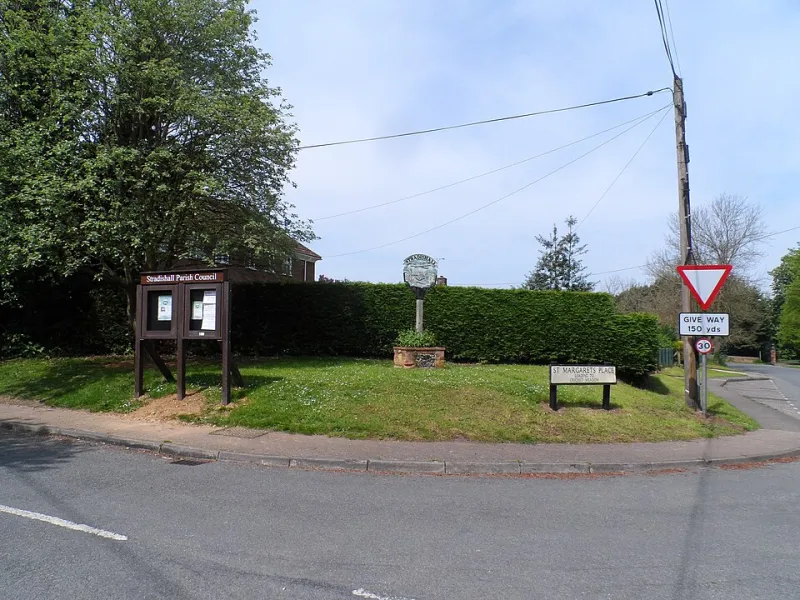
Photo: Bikeboy , CC BY-SA 2.0, via Wikimedia Commons
There is a particular kind of laminated A4 sheet, slightly curled at one corner, pinned to a board outside a village shop. It will tell you more about your prospective cottage week than the listing photographs ever will.
This is not about whether a village is ‘nice’. It is about rhythm. Some places are quiet for eleven months and then hold a steam rally. Some have a church tower that rings practice every Wednesday and a wedding peal most Saturdays. Some have a road closure scheduled for the exact week you were planning to arrive. All of that is knowable in advance, if you know where to look.
Where the notices live now
The physical board — outside the post office, on the wall of the village hall, under the porch of the church — is still the best single source. But you can do most of this from the sofa. Search the village name plus ‘parish council’, and read the minutes. They are unexpectedly gripping: traffic calming, a new marquee licence at the farm, a planning application for a glamping site, complaints about parking on the verge during the summer fete.
Then try the village hall website or Facebook page, the church newsletter, the community shop’s window, and any local what’s-on listings. Between them you get a calendar.
The posters that matter
The summer fete or carnival. Usually a Saturday. Expect a marquee, a PA system, cars parked along every verge and a one-way system improvised with cones. If your checkout is that morning, you may not be able to get the car out until mid-afternoon.
Quiz night at the pub. Weekly, often Thursday. A gentle hum rather than a nuisance, unless the cottage is next door and the windows are single-glazed.
Bell-ringing. Practice night, Sunday service, and wedding peals. A tower three hundred metres away is charming at 10am on a Sunday and less charming at 7.30pm on a Tuesday if you have small children.
Harvest supper, Christmas lights switch-on, bonfire night. Seasonal, and capable of filling a small lane with cars for one evening.
Road closure notices. These are temporary traffic regulation orders, and they are published in advance. Sometimes they mean resurfacing. Sometimes they mean a water main replacement for three weeks. Either way, the lane you booked for its peace and quiet may become a works site with a diversion.
Planning notices. Not always relevant, but a pending application for a wedding venue, a mast or a commercial kennels is worth knowing about before you commit to a ‘tucked-away’ cottage.
Noise, in the local dialect
Quiet is not the same as silent. A village with a church, a pub and a school has a daily rhythm that most people find reassuring and a few find infuriating. The school run at 3.15pm can fill a lane for twenty minutes. The bin lorry arrives at 6.40am. The milk float — where it still exists — is earlier still.
If you want deep quiet, look beyond the noticeboard too: an A-road within earshot, a quarry, an airfield, a race circuit, a railway line, a cockerel two gardens over. The village calendar tells you about events; a map tells you about infrastructure. Both together give you a realistic picture.
The brief for local life
If you want a bit of bustle, the same audit works in reverse. A village with a quiz night, a harvest supper and a well-used noticeboard is a village with something going on. Check the dates against your stay. Arriving the Tuesday after the fete is a different experience from arriving the Friday before it.
How to do the audit in twenty minutes
- Search the village name with ‘parish council’ and open the latest minutes.
- Skim the village hall or community Facebook page for upcoming events.
- Look at the church newsletter or service times if bells are a concern.
- Check the council’s roadworks map for planned closures during your dates.
- Use satellite view to see how narrow the lanes are and where people actually park.
- Ask the host a single, specific question: ‘Is anything on in the village that week?’
That last one is the most revealing. A host who says ‘it’s always quiet here’ when the parish has a three-day beer festival is either new or not paying attention. A host who tells you about the fete, the road closure and the bell practice is telling you they know their village — and that is a good sign for the cottage itself.
When the noticeboard is a red flag
A closure running the length of your stay, a wedding venue with a late licence two fields away, or a fete on your departure morning are all worth factoring in. None of them are deal-breakers on their own. But they change the shape of a week, and they are much easier to plan around before you pay than after you arrive.
The best cottage weeks are not the ones with nothing happening. They are the ones where what is happening is what you came for.