Two Cars, One Space: The Parking Arithmetic of a Group Cottage Booking

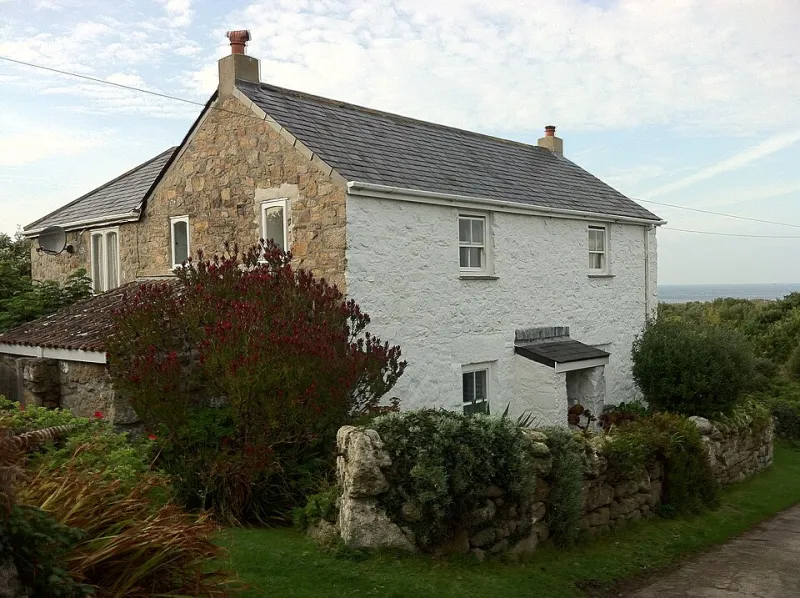
Photo: gravel driveway parking beside stone holiday cottage, two cars, English village, via ozinga.com
Three households, two SUVs and a hatchback, one cottage. Somewhere in the listing it says ‘parking for one car’, and somewhere in your group chat someone says it will be fine. It might be. It might also mean reversing forty metres down an unlit lane in the rain while a neighbour waits to get to work.
Group bookings are where parking claims get tested hardest. Solo travellers can absorb a bit of improvisation. A party of eight arriving in convoy at 5pm on a Friday cannot. So it is worth doing the arithmetic before you pay.
What ‘one car’ can mean on the ground
It rarely means a marked bay. More often it means a gravel patch beside a hedge, a strip of tarmac in front of a garage, a shared yard with the farmhouse, or the side of a barn where the surface changes from tarmac to mud somewhere around the second wheel. None of those are dishonest. They are simply measured in a different unit to the one you are using.
Useful translations: a ‘private drive’ may be shared with the owner’s vehicle. A ‘car port’ may be a nineteenth-century coach house opening that a modern SUV will not fit through with the mirrors out. ‘Roadside parking’ can mean a genuine lay-by, or a single-track lane where the post van turns around at 8am.
Width, height and the roof box problem
Start with the numbers. A typical family hatchback is around 1.8 metres wide; a large SUV with mirrors out is closer to 2.2. Old gateways, stone walls and listed building entrances were not designed for either. Add a roof box and you need vertical clearance too — low carports, overhanging branches and the beam in a converted barn all become relevant.
Ask the host for a photo of the parking area with a car actually in it, not an empty patch shot at a flattering angle. Then check the satellite view. You can learn a lot from seeing how many vehicles are already parked at a neighbouring property.
The second car problem
This is the heart of it. One space is rarely the issue; the second vehicle is. Where does it go? The options are usually: a village hall car park, a pub car park with permission, a station car park a few miles away, a lay-by, or the road outside — if there are no double yellows and the lane is wide enough not to block farm machinery.
Ask the host directly: ‘We are arriving in two cars. Where would you suggest the second one goes?’ A vague answer is information in itself. Enforcement in popular villages has tightened in recent years, and a resident who cannot get past is a complaint the host will hear about.
Neighbours, gates and shared ground
If the parking is in a shared yard, ask who else uses it and when. Oil deliveries, bin lorries, the neighbour’s gate, a tractor turning circle. Blocking someone in for a weekend is a fast route to an awkward conversation, and some cottages have a right of access written into the deeds that you will only discover on arrival.
EV charging as a parking conflict
A single charge point beside a single space is a scheduling problem for a group with two electric cars. Worse is a charge point on a wall with a cable crossing a shared yard — a trip hazard and, in some leases, a breach of the neighbour’s terms.
Ask whether the charger is tethered or untethered, whether it is on an app, what it costs, and whether the EV space is the only space. Also ask about three-pin ‘granny’ charging through a window. Many hosts prohibit it, and with good reason. Do not assume a cable will reach from wherever the second car ends up.
Seasonal arithmetic
Winter adds gradient and grit: a sloping gravel drive that is fine in July becomes a test in January, especially without lighting. Summer adds trailers, bike racks and paddleboards. Christmas adds a second car full of presents and a boot that will not shut. All three change the numbers.
A pre-booking checklist for groups
- How many vehicles, of what size, and how many spaces are actually off-road?
- Can I see a photo with a car parked, ideally from the lane looking in?
- What is the surface, and is it lit?
- Who else uses the access, and at what time of day?
- Where exactly does the second car go, and is that legal overnight?
- Is the EV charger tethered, and does the cable reach the only space?
- Is there a charge for extra vehicles in the terms?
When to negotiate, and when to walk
If the answer to any of the above is ‘you’ll manage’, ask for the photograph. If there still is not one, and your group is arriving in more than one car, look at villages with a station car park or a cottage with a proper forecourt. The difference in price is often less than the cost of a scratched hire car or a parking ticket.
Parking is not glamorous. But for group bookings it is the first thing that goes wrong and the last thing anyone mentions in the listing. Do the sums early and the rest of the weekend starts on level ground — literally.