The Last Twenty Metres: Reading a Cottage Drive Before You Book
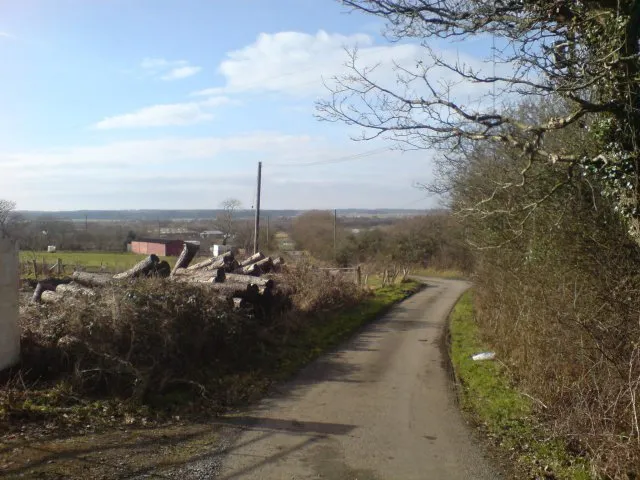
Photo: Hywel Williams, CC BY-SA 2.0, via Wikimedia Commons
You can choose a cottage for its view, its log burner and its well-photographed kitchen, then spend the first ten minutes of the holiday edging past a wall while someone waves you back. Parking is rarely the reason people book a place. It is often the reason they arrive frayed.
The phrase “private parking” is doing a lot of work on many listings. It might mean a dedicated bay outside the door. It might mean a shared courtyard where the neighbour’s van has right of way. It might mean a strip of gravel beside a hedge, with a gatepost that looks narrower in real life than it did on a phone screen. None of those are necessarily bad. They are simply different things, and the difference matters when you have a roof box, a dog crate and a car full of supermarket bags.
Parking Is a Sequence, Not a Space
Most booking descriptions treat parking as a tick-box: space for two cars, off-road parking, private drive. But arriving is a sequence. You leave the lane, find the gate, negotiate the surface, avoid the wall, work out where the second car goes and decide whether you can turn around or will be reversing blind onto a road with no pavement.
That sequence is what you want to understand before you book. A cottage with a small but well-organised parking area can be far easier than one with a generous-looking space that requires a three-point turn between a listed wall and a water butt.
Ask the host to describe the arrival in order, not just the parking itself. What do you pass before the entrance? Is the gate open or closed? Do you drive over gravel, grass or tarmac? Is there a slope? Where exactly does the car sit relative to the door, the bins and the neighbour’s boundary? A short written description is often more useful than another photograph.
Read the Photos Like a Driver
Listing photos are chosen to show space, light and character. They are not usually chosen to show the awkward corner of a wall or the fact that the drive doubles as the turning area for the whole hamlet. Look at the edges of the frame. A wide-angle shot can make a courtyard look twice its actual size, especially when the foreground is cropped out.
Check for clues: gateposts, kerbs, planters, oil tanks, log stores, bins and low stone walls. These are the things your bumpers will meet. If there is a car in the photo, use it for scale, but remember that a small hatchback tells you very little about a large estate car with a bike rack. If there is no car at all, assume the space is smaller than it appears.
Satellite views and street-level maps can help with the lane, though they will not tell you whether the gate is locked at night or whether a delivery van blocks the entrance on weekday mornings. Use them as a starting point, then ask the host to confirm.
The Measurements That Actually Help
“Room for two cars” is not a measurement. Ask for the width between gateposts, the length and width of the parking area, and whether there is space to turn around or whether you will need to reverse onto the lane. If the drive is shared, ask which bay is yours and whether another car needs to get past.
Give the host your own car’s dimensions, including mirrors if they stick out. Mention roof boxes, bike racks and tow bars. Ask about overhead clearance if the parking is under a carport, through an archway or beneath low branches. Ask about the surface too: gravel is fine for most cars, but a steep grass slope in wet weather is another matter.
For rural cottages, ask about the final approach. Is the lane single-track with passing places? Is there a cattle grid? Does the satnav stop before the actual entrance? A host who can answer these questions easily is usually a host who understands how guests arrive.
Shared Courtyards and Farmyards
A shared yard can be charming and practical, but it comes with routines. Ask where your car sits, whether the space is marked, and whether anyone else needs access. In a farmyard, that might mean a tractor, a feed delivery or a neighbour’s early start. In a courtyard, it might mean everyone shuffles cars for the bin lorry on a Tuesday.
If the parking is through a gate, ask whether it is locked, whether you need a code and where the code is kept. Ask if the gate is wide enough for a larger car and whether it opens inwards or outwards. These are small details that become very large at 9pm in November with a sleepy child in the back.
Dark Arrivals and Low Walls
Winter arrivals deserve their own warning. A low wall that is obvious in daylight can vanish after dark. Ask the host whether there is an outside light, a torch or a clear landmark at the entrance. If the final lane is unlit, ask whether they recommend arriving before a certain time. Do not assume your headlights will show you everything; they often show you the hedge and not the gatepost.
It is also worth asking where you should park on arrival if the main space is tight. Some hosts will suggest pulling into a passing place or using a wider area near the gate while you unload. Others will ask you to reverse in from the lane. Either is fine, provided you know before you set off.
A Short Script for Asking
You do not need to write an essay. A few clear questions will do:
- What exactly does the parking area look like, and how many cars fit without blocking each other?
- What is the width between the gateposts or walls?
- Can we turn around on site, or will we need to reverse onto the lane?
- Is the parking shared, allocated or open to other vehicles?
- Are there any low walls, slopes, overhanging branches or locked gates on arrival?
- What are the arrival instructions for after dark?
Ask the host to confirm the answers in your booking messages. If they cannot answer, or if the reply is simply “most cars are fine”, treat that as information too. It may still be a lovely cottage, but you should arrive expecting to take your time.
The Point of the Exercise
This is not about demanding a hotel-style forecourt. It is about knowing what happens between the lane and the kettle. A cottage with honest parking instructions is easier to love, even if the space is tight. You can plan, unload in the right order and avoid the sort of arrival that starts with a sharp intake of breath.
The best question is not “is there parking?” It is “what happens in the last twenty metres?” Get that answer before you book, and the holiday can begin when you turn off the lane rather than after you have finally parked.