Past the Cattle Grid: How to Read the Final Mile Before You Book a Rural Cottage
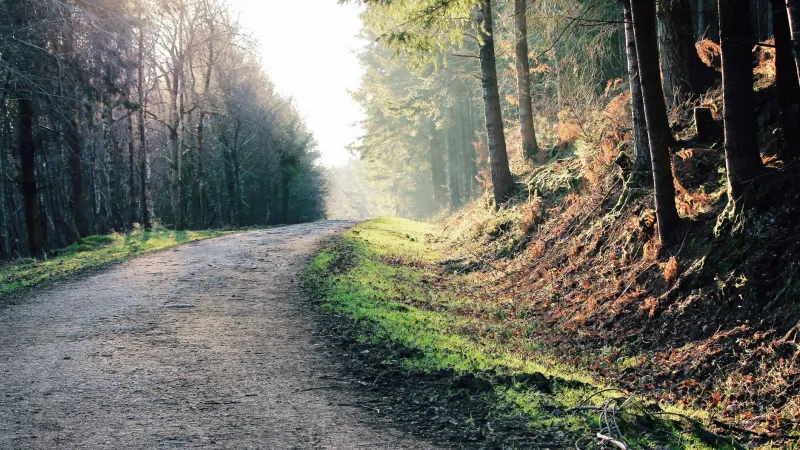
There is a particular photograph that appears on almost every rural cottage listing: a low stone wall, a bench, a valley going soft and blue in the distance. It is a lovely photograph. It also tells you precisely nothing about the eight hundred metres of rutted hardcore between the tarmac and the front door, which is the bit that will actually decide whether your Friday night arrival is a delight or a low-speed argument with a hedge.
The final approach is the least photographed, least described and most misunderstood part of a self-catering stay. So let's talk about it properly.
"Remote" is doing three different jobs
Listings use the word remote to mean at least three separate things, and mixing them up is where bookings go wrong. There is remote from people — no neighbours, no streetlights, nobody to hear the dog bark. There is remote from a road — a track, a farmyard, a gate you have to get out and open. And there is remote from a signal — no phone reception, no 4G, sometimes no broadband worth the name.
You might want all three. Plenty of people want the first and are entirely unprepared for the other two. Ask which ones apply, because the answers shape everything from what car you hire to whether you can call a plumber on a Sunday.
The track: surface, gradient, and what your car makes of it
Farm tracks vary from smooth concrete to a mud-and-gravel mix that behaves differently in July and January. The useful questions are boring ones: is it made up or unmade, is there a steep section, and does it bottom out anywhere?
Low-slung cars and speed bumps made of bedrock are a bad combination. So are rear-wheel-drive estates on wet grass and anything with a long rear overhang on a sharp incline. If you're in a hire car, remember that the excess you cheerfully ignored at the desk applies to the sump as well as the bumpers. And if you're bringing a motorhome or a long-wheelbase van, say so before you book — some tracks genuinely cannot take one, and hosts would far rather tell you than watch you try.
Single-track lanes and the etiquette nobody explains
On the narrower lanes, passing places are not optional furniture. The rule that saves everyone's afternoon is simple: the vehicle nearest a passing place reverses to it, whoever that is. Not the one who feels most put-upon, not the one in the bigger car — the one who is closest.
In practice this means being willing to reverse a hundred yards in the dark with a hedge on one side, which is worth rehearsing mentally before you arrive at 9pm after a four-hour drive. If reversing genuinely frightens you, a cottage at the end of a long single-track lane may not be the relaxing choice you imagined.
Gates, grids and things with legs
Cattle grids are fine at a crawl — they are designed to be crossed slowly and they will let you know if you don't. Gates are different: some must be closed behind you, some must be left open, and getting it wrong can put livestock on a road. A host who doesn't mention which is which is a host worth nudging.
Then there's livestock generally. Sheep on the lane at dusk, ponies with no road sense, a farm dog who considers your arrival a personal event. None of this is a problem, but it is a reason to arrive before dark if you possibly can.
Why the last mile matters more in winter 2026
The pattern of rural bookings has shifted. More people are taking cottages outside the school holidays — long weekends in January, midweek breaks in February, a few days in November to get away from everything — and that quietly raises the stakes on the approach road. You are more likely to be arriving in the dark, more likely to be arriving in poor weather, and more likely to be the only booking that week, which means the track may not have seen a vehicle since Tuesday.
Highways authorities grit the roads they're responsible for. They do not grit the lane, and they certainly do not grit a private track. Ask directly: who clears snow from the track, is it gritted, and is the lane on the council's route or not? A host with a quad bike and a snowplough will tell you cheerfully. A host who goes quiet has told you something too.
The plug question: charging an EV in the middle of nowhere
Rural charging has improved enormously, but "nearest rapid charger, twenty-two miles" is still a real sentence in 2026. If you're bringing an electric car, establish three things: whether the cottage has a dedicated charger, whether the host permits a granny cable through a window, and whether the supply can take it. Older rural properties on a single-phase supply with an electric range and an immersion heater are already close to their limit; adding a car for eight hours is not always fine.
Be honest about it and expect honesty back. Hosts who allow granny charging often ask for a contribution to the electricity — entirely reasonable, and much better raised at booking than discovered in a departure-day message.
Peaceful, at 11pm, with no signal
Here is the thing nobody puts in the brochure. Silent darkness is genuinely restorative — no light pollution, no traffic, a sky with actual stars in it. It is also the moment you discover the boiler has failed and there is nobody to call, because there is no reception and the wifi only works in the kitchen.
So ask what the fallback is. Is there a landline? Does wifi calling work? Is there a neighbour who holds a spare key and doesn't mind being knocked up? Is the host contactable by message on the wifi? A good host will have thought about this already, because it happens to them roughly once a winter.
The pre-booking checklist to send a host
Copy this, trim it, and send it as a message before you pay:
- Is the access track made up or unmade, and roughly how long is it?
- Are there any steep gradients, tight gates or low-clearance pinch points?
- What's the lane like for passing places, and how far to the nearest one?
- Would you describe the approach as suitable for a low-clearance car / estate / motorhome?
- How is the track treated in snow and ice, and who does it?
- Is there mobile reception, and on which networks?
- Does the wifi reach the whole property, and is wifi calling reliable?
- Can we charge an electric car, and is there a cost?
- What's the nearest shop that's open late, and the nearest pub that serves food?
- Is there a landline or neighbour we can contact in an emergency?
Ten questions, one message, two minutes of a host's evening. It is the cheapest insurance in self-catering.
A last mile worth having
The track is part of the holiday, not an obstacle in front of it. A bit of mud on the tyres and a gate you have to open yourself is often exactly the point. You just want to know in advance whether you're getting a gently gravelled driveway or a small act of off-roading — and to have booked the right car, the right arrival time and the right expectations accordingly.